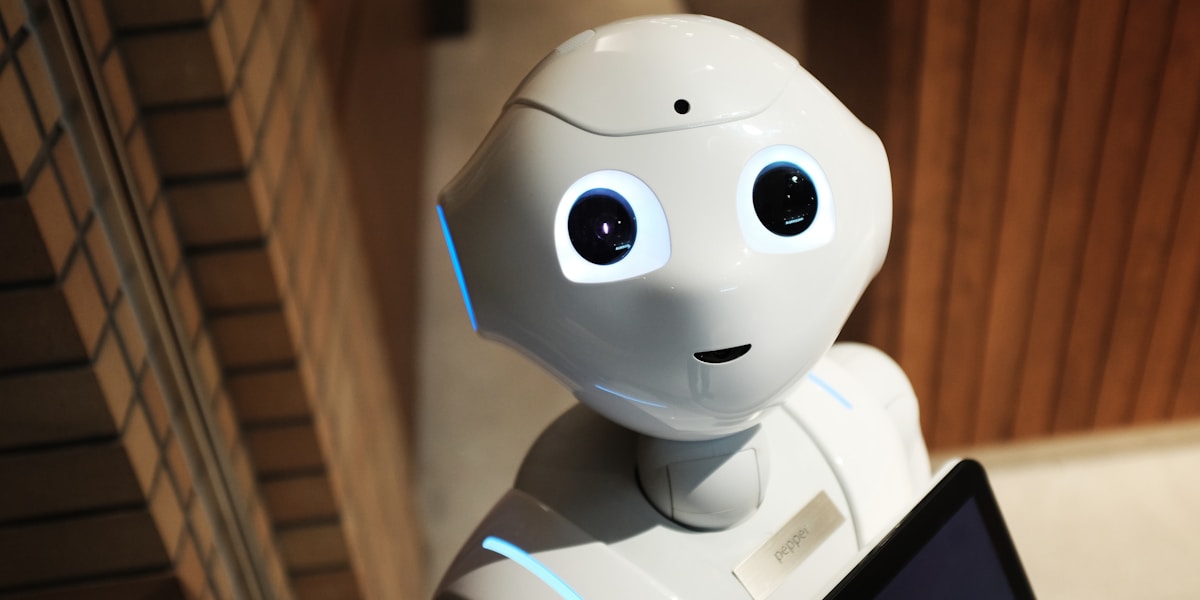
The Rise of Robotic Process Automation: 2023 Job Displacement Report
A comprehensive look at how robotic process automation reshaped the global workforce in 2023 — from Amazon's warehouse revolution to the quiet elimination of back-office roles at major banks and insurers.
The Year Automation Went Mainstream
2023 was the year robotic process automation stopped being a pilot program and became a line item on every Fortune 500 company's operating budget. From warehouse floors to corporate back offices, physical robots and software bots displaced human workers at a pace that outstripped most forecasts from just two years earlier.
This report examines the key sectors, companies, and technologies that drove automation-linked job displacement throughout 2023, drawing on public filings, earnings calls, labor statistics, and industry reports.
Warehouse and Logistics: Amazon Sets the Pace
Amazon's automation ambitions have been well documented, but 2023 was the year the infrastructure caught up to the strategy. The company deployed its Sparrow robotic arm — capable of detecting, selecting, and handling individual products — across multiple fulfillment centers in the United States.
Amazon's fleet of mobile robots surpassed 750,000 units operating across its global logistics network by mid-2023, up from roughly 520,000 at the end of 2022 [Source: Amazon Robotics Blog]. Each new generation of robot is more capable than the last. The Proteus autonomous mobile robot, Amazon's first fully autonomous warehouse robot, moved from limited deployment to broad rollout during the year.
The impact on headcount is difficult to isolate precisely because Amazon simultaneously grew its delivery network. However, the company's overall workforce shrank by tens of thousands from its pandemic peak even as package volume continued to climb. The efficiency gains are undeniable.
The Broader Warehouse Picture
Amazon wasn't alone. The warehouse automation sector saw widespread adoption:
| Company | Automation Initiative | Workforce Impact |
|---|---|---|
| Amazon | Sparrow robotic arms, Proteus AMRs, Sequoia system | Headcount declined from pandemic highs despite rising volume |
| Walmart | Symbotic automated warehouse systems | Converted multiple distribution centers to automated operations |
| FedEx | DexR sorting robots, autonomous delivery vehicles | Reduced package handling staff across sorting facilities |
| Ocado | Automated fulfillment centers for grocery | Operates with a fraction of staff compared to traditional grocery DC |
| XPO Logistics | Automated freight sorting, smart warehouse tech | Reduced manual sorting positions across hub network |
The International Federation of Robotics reported that warehouse robot installations grew by over 50% year-over-year globally in 2023, making logistics the fastest-growing segment for industrial robotics.
Manufacturing: The Quiet Revolution Continues
While warehouses captured headlines, traditional manufacturing continued its decades-long automation trajectory — but with a notable acceleration driven by labor shortages and post-pandemic supply chain redesigns.
Automotive
The automotive sector remained the largest deployer of industrial robots globally. Tesla's Gigafactories operated with some of the highest robot-to-worker ratios in the industry, and the company continued developing its Optimus humanoid robot throughout 2023. While Optimus remained in prototype stage for most of the year, Tesla demonstrated it performing simple factory tasks at investor events — a signal of intent that sent ripples through the manufacturing labor market.
Traditional automakers responded in kind:
- Hyundai (through its Boston Dynamics subsidiary) deployed Spot and Stretch robots in manufacturing facilities for inspection and material handling
- BMW expanded its use of collaborative robots (cobots) on assembly lines, particularly for ergonomically demanding tasks
- Toyota invested heavily in robotic welding and painting systems, reducing headcount in body-shop operations
Electronics Manufacturing
Foxconn, the world's largest electronics manufacturer and primary assembler of Apple products, continued its stated goal of automating large portions of its workforce. The company had previously announced plans to replace significant portions of its assembly workers with robots. By 2023, multiple iPhone assembly lines in Zhengzhou, China operated with substantially reduced human oversight.
Food Processing
One of 2023's less-reported but significant trends was the rapid automation of food processing. Companies like Tyson Foods, JBS, and Pilgrim's Pride deployed robotic systems for tasks previously considered too complex for machines:
- Deboning and portioning poultry
- Quality inspection via computer vision
- Palletizing and case packing
- Sanitation and cleaning
The meatpacking industry, which has historically relied on large numbers of manual laborers working in difficult conditions, saw some of the most dramatic automation-driven workforce reductions outside of tech.
Financial Services: The Back-Office Purge
If warehouses were the most visible arena for automation in 2023, financial services were the most consequential in dollar terms. Major banks and insurance companies deployed RPA (robotic process automation) at unprecedented scale.
Banking
The big banks went all-in on automation in 2023:
| Institution | RPA/Automation Focus | Reported Impact |
|---|---|---|
| JPMorgan Chase | Contract intelligence (COiN), fraud detection, trade processing | Eliminated thousands of back-office processing roles |
| Citigroup | Middle-office automation, compliance screening | Announced major restructuring with automation as key enabler |
| HSBC | Customer service automation, anti-money laundering bots | Reduced headcount significantly in operations |
| Deutsche Bank | Process automation across retail banking | Cut back-office staff as part of multi-year transformation |
| Wells Fargo | Mortgage processing automation, document review | Reduced mortgage processing teams amid volume decline + automation |
JPMorgan's COiN (Contract Intelligence) platform alone was processing in seconds what previously required an estimated 360,000 hours of lawyer time annually. While the bank hired aggressively in technology roles, the net effect on traditional banking positions was deeply negative.
Insurance
The insurance industry saw similar patterns. Companies like Lemonade (which was built as an AI-first insurer), Progressive, and Allstate expanded automated claims processing. Tasks that once required adjusters, processors, and reviewers were increasingly handled end-to-end by software.
The Lloyd's of London market, traditionally one of the most paper-intensive financial markets in the world, made significant strides toward digital automation in 2023 through its Blueprint Two initiative, threatening the roles of thousands of administrative and processing staff across the London market.
Retail: Self-Checkout and Beyond
The retail sector's automation story in 2023 extended well beyond the now-ubiquitous self-checkout kiosk.
Self-Checkout Saturation
By the end of 2023, major retailers had reached a tipping point with self-checkout:
- Walmart continued converting traditional checkout lanes to self-checkout across its US store base
- Kroger expanded its Scan, Bag, Go technology
- Target increased self-checkout lanes while reducing staffed registers
- IKEA moved aggressively toward self-checkout-only stores in several European markets
The cumulative effect on cashier employment was substantial. The Bureau of Labor Statistics projected continued decline in cashier positions through the decade, with automation cited as a primary driver alongside e-commerce growth.
In-Store Robotics
Beyond checkout, robots appeared on retail floors in increasing numbers:
- BrainCorp autonomous floor-cleaning robots operated in thousands of Walmart, Sam's Club, and Kroger locations
- Simbe Robotics Tally robot conducted automated shelf scanning and inventory management in hundreds of stores
- Badger Technologies deployed safety monitoring and spill detection robots in grocery stores
These robots didn't directly replace workers one-for-one, but they enabled stores to operate with leaner staffing models. A store that once needed dedicated staff for floor maintenance and inventory counts could reallocate — or eliminate — those positions.
Customer Service: The Chatbot Takeover
2023 was arguably the year that AI-powered chatbots became genuinely competent enough to handle the majority of Tier 1 customer service inquiries without human intervention.
Companies across industries reported dramatic reductions in customer service staffing:
- Klarna announced that its AI assistant was handling the work equivalent of hundreds of full-time customer service agents within weeks of deployment
- Telecom companies including Vodafone and T-Mobile expanded virtual assistant capabilities, reducing call center staffing
- Major airlines deployed conversational AI for booking changes, baggage tracking, and flight status inquiries
The technology wasn't perfect — escalation to human agents remained necessary for complex issues. But the volume of interactions that could be handled without a human reached a critical threshold in 2023, leading to significant reductions in customer service headcount globally.
The Offshore Call Center Impact
The implications for countries whose economies depend on business process outsourcing (BPO) were severe. The Philippines, India, and other nations with large call center industries began to see the early effects of AI chatbot displacement. While the full impact would take years to materialize, 2023 marked the beginning of what many labor economists predicted would be a significant disruption to BPO employment.
The Numbers in Context
Quantifying exact job displacement attributable to automation in 2023 is challenging because companies rarely state explicitly that robots replaced workers. Instead, they use euphemisms: "efficiency improvements," "operational optimization," "digital transformation."
However, several data points paint the picture:
- Industrial robot installations reached a new global record in 2023, with the International Federation of Robotics (IFR) reporting growth across all major markets
- RPA software revenue grew substantially year-over-year, with UiPath, Automation Anywhere, and Blue Prism/SS&C all reporting strong enterprise adoption
- Self-checkout transactions as a share of total retail transactions hit new highs in North America and Europe
- BLS data showed continued decline in occupations most exposed to automation: cashiers, data entry workers, file clerks, and certain manufacturing roles
Sector-by-Sector Displacement Estimate
| Sector | Primary Automation Driver | Estimated Global Displacement (2023) |
|---|---|---|
| Warehousing & Logistics | Mobile robots, robotic arms, automated sorting | Tens of thousands of positions |
| Manufacturing | Industrial robots, cobots, automated inspection | Continued multi-decade trend |
| Financial Services | RPA, algorithmic trading, automated compliance | Thousands of back-office roles |
| Retail | Self-checkout, inventory robots, e-commerce fulfillment | Significant cashier and floor staff reduction |
| Customer Service | AI chatbots, virtual assistants | Growing displacement of Tier 1 agents |
| Food Processing | Robotic picking, sorting, packaging | Thousands of processing positions |
What Made 2023 Different
Several factors made 2023's automation wave qualitatively different from previous years:
1. The Labor Shortage Accelerant
Post-pandemic labor shortages gave companies both the justification and the urgency to automate. "We can't find workers" became the socially acceptable rationale for deploying robots — even when the real calculation was that robots were simply cheaper and more predictable than humans.
2. Generative AI Entered the Picture
While this report focuses on physical and process automation (robots and RPA), the emergence of generative AI in late 2022 and throughout 2023 created an entirely new category of automation threat. ChatGPT, Claude, Midjourney, and their peers began displacing knowledge workers — a topic covered extensively in our companion reports. But the psychological impact was profound: for the first time, workers across the entire skill spectrum felt vulnerable.
3. Interest Rates Changed the Math
Rising interest rates in 2023 increased the cost of capital but also increased pressure on companies to cut operating costs. Automation projects that might have had a three-year payback period under low rates suddenly looked more attractive as companies scrambled to protect margins. The robot doesn't need a raise. The robot doesn't have healthcare costs. The robot works three shifts.
4. China's Automation Surge
China installed more industrial robots in 2023 than the rest of the world combined, continuing a trend that accelerated sharply after 2020. Chinese manufacturers, facing rising labor costs and demographic headwinds (a shrinking working-age population), invested aggressively in automation. This had global implications: as Chinese manufacturing became more automated and more cost-competitive, it increased pressure on manufacturers everywhere to follow suit or lose market share.
Looking Ahead to 2024
As 2023 drew to a close, several trends pointed toward acceleration in 2024:
- Humanoid robots moved from lab curiosities to pre-commercial products. Tesla's Optimus, Figure AI's Figure 01, and Agility Robotics' Digit all made significant progress toward deployment in real-world settings
- RPA vendors integrated generative AI into their platforms, creating what they called "intelligent automation" — bots that could handle unstructured data and make judgment calls that previously required human intervention
- Autonomous vehicles inched closer to broad deployment, with Waymo expanding its robotaxi service and multiple companies testing autonomous trucking on highways
- Regulation remained largely absent. Despite growing public concern about automation-driven job loss, no major economy passed significant legislation specifically addressing robot displacement
The automation wave of 2023 wasn't a tsunami — it was a steadily rising tide. Each individual deployment, each new robot, each automated process seemed incremental. But the cumulative effect was transformative. Millions of tasks that were performed by humans at the start of the year were performed by machines at the end of it.
2024 would bring more of the same — only faster.
---
Robot Layoffs tracks verified automation-linked workforce reductions across global industries. This report draws on IFR data, company SEC filings, earnings call transcripts, BLS statistics, and industry publications. Displacement estimates represent ranges based on available verified sources; actual figures may differ due to incomplete corporate disclosure.
What to learn next
Coursera
Build in-demand skills with structured courses
ToolPerplexity
Research and productivity tools for the AI era
CareerResume.io
Resume and job transition support
Some links may earn us a commission. We only recommend resources we believe provide genuine value.
This summary was prepared with AI assistance and reviewed by our editorial team.
Published by Robot Layoffs · Data estimated from public reporting · Methodology